| Sno | Biosphere Reserve | Location in the State/UT |
| 1 | Nilgiri | Part of Wayanad, Nagarhole, Bandipur and Madumalai, Nilambur, Silent Valley and Siruvani Hills in Tamilnadu, Kerala and Karnataka |
| 2 | Nanda Devi | Part of Chamoli, Pithoragarh and Almora districts in Uttarakhand |
| 3 | Nokrek | Part of East West and South of Garohill districts in Meghalaya |
| 4 | Manas | Part of Kokrajhar, Bongaigaon, Barpeta, Nalbari, Kamrup and Darang districts in Assam |
| 5 | Sunderban | Part of delta of Ganges & Brahmaputra river system in West Bengal |
| 6 | Gulf of Mannar | India part of Gulf of Mannar extending from Rameswaram island in the north to Kanyakumari in the south of Tamilnadu |
| 7 | Great Nicobar | Southern most island of Andaman and Nicobar islands |
| 8 | Similipal | Part of Mayurbhanj district of Orissa |
| 9 | Dibru-Saikhova | Part of Dibrugarh and Tinsukia districts of Assam |
| 10 | Dehang-Dibang | Part of Upper Siang, West Siang and Dibang Valley districts of Arunachal Pradesh |
| 11 | Pachmarhi | Part of Betul,Hoshangabad and Chhindwara districts in Madhyapradesh |
| 12 | Khangchendzonga | Part of North and West districts of Sikkim |
| 13 | Agasthyamalai | Part of Thirunelveli and Kanyakumari districts in Tamilnadu and Thiruvanthapuram, Kollam and Pathnamthitta districts in Kerala |
| 14 | Achanakmar-Amarkantak | Part of Anuppur and Dindori districts of Madhyapradesh Bilaspur district of Chattisgarh |
| 15 | Kachchh | Part of Kachchh,Rajkot, Surendranagar and patan districts of Gujarat |
| 16 | Cold Desert | Pin Valley NationalPark and surroundings; Chandratal and Sarchu; and Kibber wild life sanctuary in HimachalPradesh |
| 17 | Seshachalam | Seshachalam Hill ranges in Eastern Ghats encompassing part of Chttoor and Kadapa districts in Andhrapradesh |
| 18 | Panna | Part of Panna and Chhattarpur districts in Madhyapradesh |
Showing posts with label Environment. Show all posts
Showing posts with label Environment. Show all posts
List of Biosphere Reserves in India

List of Elephant Reserves in India
List of Elephant Reserves in India
| Sno | Elephant Reserve | State |
| 1 | Mayur Jharna | West Bengal |
| 2 | Singhbum | Jharkhand |
| 3 | Mayurbhanj | Odisha |
| 4 | Mahanadi | Odisha |
| 5 | Sambalpur | Odisha |
| 6 | Badalkhol-Tamorpingla | Chattisgarh |
| 7 | Kameng | Arunachal Pradesh |
| 8 | Sonitpur | Assam |
| 9 | Dihing-Patkai | Assam |
| 10 | South Arunachal | Arunachal Pradesh |
| 11 | Kaziranga - Karbi Anglong | Assam |
| 12 | Dhansiri – Lungding | Assam |
| 13 | Intanki | Nagaland |
| 14 | Chirang – Ripu | Assam |
| 15 | Eastern Dooars | West Bengal |
| 16 | Garo Hills | Meghalaya |
| 17 | Mysore | Karnataka |
| 18 | Wayanad | Kerala |
| 19 | Nilgiri | Tamilnadu |
| 20 | Rayala | Andhra Pradesh |
| 21 | Nilambur | Kerala |
| 22 | Coimbatore | Tamilnadu |
| 23 | Anamalai | Tamilnadu |
| 24 | Anamudi | Kerala |
| 25 | Periyar | Kerala |
| 26 | Srivilliputtur | Tamilnadu |
| 27 | Shivalik | Uttarakhand |
| 28 | Uttar Pradesh | Uttar Pradesh |
National River Conservation Plan
National River Conservation Plan
Objective: is to improve the water quality of the rivers, which are the major water sources in the country, through the implementation of the pollution abatement works.
So far 42 rivers have been selected under this programme.
The pollution abatement works taken up under this programme include
- Interception and diversion works to capture raw sewage flowing into the rivers through open drains and diverting them for treatment.
- Setting up of sewage treatment plants (STPs) for treating the diverted sewage.
- Construction of low cost sanitation toilets to prevent open defecation on river banks.
- Construction of Electric Crematoria to conserve the use of wood.
- River front development work such as improvement of bathing ghats.
- Afforestation on river banks.
- Public Participation and awareness building etc.
List of Rivers covered under National River Conservation Plan
| Sno | River |
| 1 | Adayar |
| 2 | Beas |
| 3 | Betwa |
| 4 | Beehar |
| 5 | Bhadra |
| 6 | Brahmani |
| 7 | Cauvery |
| 8 | Cooum |
| 9 | Chambal |
| 10 | Damodar |
| 11 | Dhipu & Dhansiri |
| 12 | Ganga |
| 13 | Ghaggar |
| 14 | Godavari |
| 15 | Gomati |
| 16 | Khan |
| 17 | Krishna |
| 18 | Kshipra |
| 19 | Mahanadi |
| 20 | Mandovi |
| 21 | Mandakini |
| 22 | Mahananda |
| 23 | Mindhola |
| 24 | Musi |
| 25 | Narmada |
| 26 | Pennar |
| 27 | Pamba |
| 28 | Panchganga |
| 29 | Rani Chu |
| 30 | Ramganga |
| 31 | Sabarmati |
| 32 | Satluj |
| 33 | Subarnarekha |
| 34 | Tapti |
| 35 | Tapi |
| 36 | Tunga |
| 37 | Tungabadra |
| 38 | Tamrabarani |
| 39 | Vaigai |
| 40 | Vennar |
| 41 | Wainganga |
| 42 | Yamuna |
List of wetlands of International Importance in India under Ramsar Convention
| Sno | Name of the Wetland | State |
| 1 | Chandrataal | Himachal Pradesh |
| 2 | Renuka | Himachal Pradesh |
| 3 | Rudrasagar | Tripura |
| 4 | Upper Ganga | Uttar Pradesh |
| 5 | Hokarsar | Jammu and Kashmir |
| 6 | Surinar – Mansar | Jammu and Kashmir |
| 7 | Bhitarkanika Mangroves | Odisha |
| 8 | Bhoj Wetland | Madhya Pradesh |
| 9 | Deepor Beel | Asom |
| 10 | East Calcutta Wetlands | West Bengal |
| 11 | Kolleru Lake | Andhra Pradesh |
| 12 | Sasthamkotta Lake | Kerala |
| 13 | Ashtamudi | Kerala |
| 14 | Tsomoriri | Jammu and Kashmir |
| 15 | Vembanad – Kol wetland | Kerala |
| 16 | Point Calimere Sanctuary | Tamilnadu |
| 17 | Pong Dam Lake | Himachal Pradesh |
| 18 | Kanjli | Punjab |
| 19 | Ropar | Punjab |
| 20 | Harike Lake | Punjab |
| 21 | Loktak Lake | Manipur |
| 22 | Sambhar Lake | Rajasthan |
| 23 | Wular Lake | Jammu and Kashmir |
| 24 | Chilika Lake | Odisha |
| 25 | Keoladeo National Park | Rajasthan |
| 26 | Nalsarovar | Gujarat |
List of Indian Biosphere Reserves included in UNESCO World Network of Biosphere Network
India has 18 Biosphere Reserves, out of these nine Biosphere Reserves have been included in UNESCO World Network of Biosphere Network. They are,
- Nilgiri (Tamil Nadu, Kerala and Karnataka),
- Gulf of Mannar(Tamil Nadu),
- Sunderban (West Bengal),
- Nanda Devi,(Uttarakhand),
- Pachmarhi (Madhya Pradesh),
- Similipal(Orissa),
- Nokrek (Meghalaya),
- Achanakmar-Amarkantak(Chhattisgarh & Madhya Pradesh) and
- Great Nicobar
List of UNESCO Natural World Heritage Sites in India
UNESCO has recognized six natural World Heritage Sites in India
- Nanda Devi National Park,
- Kaziranga National Park,
- Manas National Park,
- Keoladeo National Park,
- Sundarbans National Park and
- Serial cluster of 39 sites from Western Ghats spread over 4 States.
The Valley of Flowers National Park has also been included in the list of World Heritage Sites as an extension of Nanda Devi National Park.
Tentative list of World Heritage Site nominations from India include
- Bhitarkanika Conservation area,
- Desert National Park, Great
- Himalayan National Park,
- Kangchendzonga National Park,
- Namdhapha National Park,
- Neora Valley National Park, and
- Wild Ass Sanctuary, Little Rann of Kutch
List of Environmental Laws in India
Following is a comprehensive list of Environmental laws made by the Government of India
- The Indian Forest Act, 1927
- The Prevention of Cruelty to Animals Act,1960
- The Wildlife Protection Act, 1972
- The Water (Prevention and Control of Pollution) Act, 1974
- The Forest (Conservation) Act, 1980
- The Air (Prevention and Control of Pollution) Act, 1981
- The Environment (Protection) Act, 1986
- National Forest Policy, 1988
- Hazardous Wastes (Management and Handling) Rules, 1989
- The Public Liability Insurance Act, 1991
- Coastal Regulation Zone (CRZ), 1991 -under The Environment (Protection) Act, 1986
- The National Environment Tribunal Act, 1995
- Ozone Depleting Substances (Regulation) Rules, 2000
- Noise Pollution (Regulation and Control) Rules, 2000
- Protection of Plant Varieties and Farmers' Rights Act of 2001
- Biological Diversity Act, 2002
- The Scheduled Tribes and Other Traditional Forest Dwellers (Recognition of Forest Rights) Act, 2006
- Wetland (Conservation and Management) Rules 2010
- National Green Tribunal Act, 2010
Critically Endangered Species of India booklet by Ministry of Environment and Forests - free download
- Released in 2011
- Released by the Ministry of Environment and Forests in collaboration with Zoological Survey of India
- Covers
- Criteria for Critically endangered species
- Birds
- Mammals
- Reptiles
- Amphibians
- Fish
- Spiders and
- Corals
https://drive.google.com/file/d/0B2lrHcS2MH0vNmRWcEhJLVpHWnFCellFaXcwejZrbTNCODB3/view?usp=sharing
Important Species of India - Crocodiles
Mugger crocodile (Crocodylus palustris) :
 |
| Mugger crocodile |
- The mugger crocodile, also called the Indian crocodile, or marsh crocodile, is found throughout the Indian subcontinent.
- It is listed as vulnerable by IUCN.
- This crocodile is the most common and widespread of the three species of crocodiles in India.
- The mugger is mainly a freshwater species, and found in lakes, rivers and marshes.
Important Species Of India - Elephant
 |
| Indian Elephant |
The Indian Elephant (Elephas maximus indicus) :
- The Indian Elephant is listed as endangered by IUCN.
- Elephants inhabit grasslands, dry deciduous, moist deciduous, evergreen and semi-evergreen forests.
Important Species Of India - Dogs, Bears
Dogs
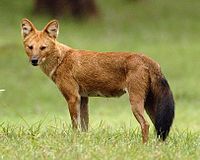
The Indian Wild Dog or the Dhole (Cuon alpinus) :
 |
| Dhole |
- The dholes are classified as endangered by the IUCN.
- Dholes are found in the central Indian Highlands and the Western and Eastern Ghats, northeast India's states and in Ladakh.
- Threats to dholes include habitat loss, depletion of its prey base, competition from other predators, diseases from domestic and feral dogs.
Important Species Of India - Monkeys, Langurs, Apes
Monkeys
The Rhesus Macaque (Macaca mulatta) :
 |
| Rhesus Macaque |
- It is also called as the rhesus monkey.
- It is one of the best known monkey species.
- It is listed as Least Concern by IUCN.
- Found throughout Norhern India.
- The threats to this species include hunting, habitat degradation and fragmentation.
Important Species of India - Wild Ass, Gaur, Yak, Wild Buffalo and Rhinoceros
The Indian Wild Ass (Equus hemionus khur) :
 |
| The Indian Wild Ass |
- it is the only wild ass found in India
- It is Classified as endangered by IUCN.
Distribution :

- Its last refuge lies in the Indian Wild Ass Sanctuary, Little Rann of Kutch and its surrounding areas of the Great Rann of Kutch in the Gujarat province of India.
- Saline deserts (rann), arid grasslands and shrublands are its preferred environments.
Threats :
- Disease
- habitat degradation due to salt activities,
- the invasion of the Prosopis juliflora shrub, and
- encroachment and grazing by the Maldhari.
Important Species of India - Antelopes and Deers
The Chinkara or Indian Gazelle (Gazella gazelle) :
 |
| The Chinkara |
- The Chinkara is a gazelle found in India.
- It is listed as Least Concern by IUCN.
- It is found in grassland and desert habitats.
- The population of chinkaras is in sharp decline due to hunting for game.
Important Species of India - Cats
The Tiger (Panthera tigris) :
 |
The Tiger (Panthera tigris) |
- The subspecies found in India is Bengal Tiger (Panthera tigris tigris).
- It is classified as endangered by IUCN.
Distribution :
- The bengal tigers inhabit tropical moist evergreen forests, tropical dry forests, tropical and subtropical moist deciduous forests, mangroves, subtropical and temperate upland forests, and alluvial grasslands.
- The major tiger conservation units in India are Manas-Namdapha, Hazaribagh National Park, Nagarjunsagar-Srisailam Tiger Reserve, Kanha-Indravati, Panna National Park, Melghat Tiger Reserve, Ratapani Tiger Reserve, Kaziranga-Meghalaya, Kanha-Pench, Simlipal, Indravati Tiger Reserves, Periyar, Kalakad-Mundathurai, Bandipur and Parambikulam Wildlife Sanctuary.
Wetland, Swamp, Marsh, Bog, Fen and Mangrove
A wetland is a land area that is saturated with water, either permanently or seasonally, such that it takes on characteristics that distinguish it as a distinct ecosystem. The water found in wetlands can be saltwater, freshwater, or brackish.
There are four major kinds of wetlands: swamps, marshes, bogs and fens.
A swamp is a wetland that is forested.
 |
| Swamp |
A marsh is a type of wetland that is dominated by herbaceous rather than woody plant species
 |
| Marsh |
A bog is a wetland that accumulates peat, a deposit of dead plant material—often mosses, and in a majority of cases, Sphagnum moss.
 |
| Bog |
A fen is one of the four main types of wetland, and is usually fed by mineral-rich surface water or groundwater.
Mangroves are various kinds of trees up to medium height and shrubs that grow in saline coastal sediment habitats in the tropics and subtropics – mainly between latitudes 25° N and 25° S
 |
| Mangrove |
The Tiger population estimation procedure of India
The present scientific tiger estimation procedure involves rigorous statistical analyses. The statistical data is obtained in three phases and involves ground surveys, analyses of satellite data and camera traps.
The three phases of the Tiger Estimation Procedure
Phase I: Ground survey data at the beat level was collected by field personnel in a standardised protocol after training.
Phase II: Statistical and satellite data were analysed by the Wildlife Institute of India in collaboration with the National Tiger Conservation Authority.
Phase III: The camera trapping procedure was conducted by research biologists.
The population of the tiger was estimated in 17 Indian states. The results from this procedure indicate that tiger populations are viable within Protected Areas but are under threat outside them.
This data is a crucial component of Project Tiger and is used to:
- Measure the present status of tiger populations across the 17 tiger States in the country.
- Develop effective strategies to strengthen future tiger conservation programs.
WWF Priority species of India - Lesser known species
 |
| Fishing Cat |
 |
| Ganges Shark |
 |
| Great Indian Bustard |
 |
| Himalayan Quail |
 |
| Hoolock Gibbon |
 |
| House Sparrow |
 |
| Kaiser-i-Hind butterfly |
 |
| Nicobar Pigeon |
 |
| Olive ridley Turtle |
 |
| Chinese Pangolin |
 |
| Purple Frog - Nasikabatrachus sahyadrensis |
 |
| Rameshwaram Ornamental Spider |
 |
| Red Line Torpedo Barb |
 |
| Sarus Crane |
 |
| Slender Loris |
 |
| White Winged Wood Duck |
http://www.wwfindia.org/about_wwf/priority_species/lesser_known_species/
WWF Priority species of India
 |
| Asiatic Elephant |
 |
| Asiatic Lion |
 |
| Bengal Tiger |
 |
| Black Necked Crane |
 |
| Gharial |
 |
| Nilgiri Tahr |
 |
| Great Asian One-Horned Rhino |
 |
| Red Panda |
 |
| Smooth coated Otter |
 |
| Snow Leopard |
 |
| Ganges River Dolphin © François Xavier PELLETIER/WWF-Canon |
Animal Species of India
| Animal | |
| Black Buck | True antelope |
| Nilgai | Largest dryland herbivore |
| Himalayan Tahr | Related to wild goat |
| Nilgiri Tahr | Closely related to sheep |
| One-Horned Rhinoceros or Indian Rhinoceros | Found in Assam |
| Asatic Lion | Found only in Gir National Park |
| Snow Leopard | Found on himalayan slopes |
| Dhole or Indian Wild Dog | Highly social animal |
| Pigmy Hog | Found in Assam |
| Leopard | One of the five big cats found in India |
| Clouded Leopard | Found in Himalyan Foothills |
| Cheetah | Extinct in India |
Blackbuck

Nilgai

Himalayan tahr



Subscribe to:
Posts (Atom)